Choosing a B-School is an important career decision. Students usually compare fees, placements, faculty, and campus facilities. However, there is another factor they should not overlook: institutional recognition and quality assessment.
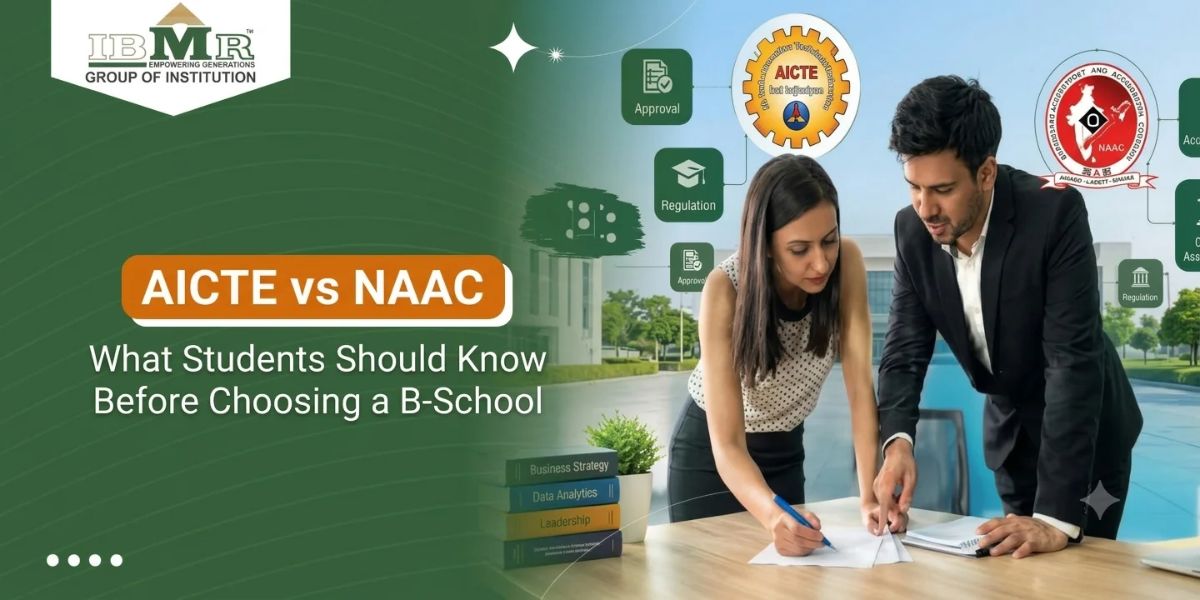
AICTE and NAAC are two important names in Indian higher education. Both relate to educational standards, but their roles are different. Understanding this difference can help students evaluate management institutes with greater confidence.
What Is AICTE?
AICTE stands for the All India Council for Technical Education. It works under the Ministry of Education, Government of India.
AICTE regulates and approves eligible technical education programs and institutions. Its role includes maintaining standards for approved areas of technical and management education. This makes AICTE approval particularly relevant when students consider a PGDM program.
For instance, students searching for an AICTE Approved Business School in Gurgaon should verify the institute’s current approval status. They should also confirm whether the approval covers their chosen program. This simple check can prevent confusion during the admission process.
What Is NAAC?
NAAC stands for the National Assessment and Accreditation Council. It evaluates higher education institutions through a structured assessment process.
The assessment covers areas such as teaching, infrastructure, research, governance, and student support. NAAC then provides an accreditation outcome based on its evaluation. Therefore, it offers students a broader view of an institution’s academic environment.
However, students should not treat a NAAC grade as the only measure of college quality. Program-specific factors still deserve careful attention.
Also Read: Why AICTE Approval Matters and Which Gurgaon B-Schools Qualify
AICTE vs NAAC: Key Difference
The easiest way to understand the difference is to look at their primary purpose. AICTE deals with approval and regulation for applicable technical education programs. NAAC assesses the overall quality of higher education institutions.
Therefore, they answer different questions for students. AICTE helps students check whether a relevant program meets applicable regulatory requirements. NAAC helps students understand the institution’s broader quality standards.
Here is a simple comparison:
|
Factor |
AICTE |
NAAC |
| Full form | All India Council for Technical Education | National Assessment and Accreditation Council |
| Main purpose | Approval and regulation | Assessment and accreditation |
| Primary focus | Eligible technical and management programs | Overall institutional quality |
| Student relevance | Important for applicable PGDM programs | Useful for evaluating institutional quality |
| Assessment approach | Regulatory requirements | Multiple quality parameters |
Why AICTE Approval Matters for PGDM
Students considering PGDM should verify the program’s regulatory status before applying. An AICTE Approved PGDM College Gurgaon can give students greater clarity about the program’s approval status.
However, approval should not end the research process. Students should also examine the curriculum, faculty, internships, placements, and industry exposure.
Most importantly, they should verify information through reliable and official sources. This approach helps students separate verified information from promotional claims.
Why NAAC Accreditation Is Useful
NAAC accreditation can give students additional insight into an institution. Its assessment considers several aspects of the academic and administrative environment.
For example, students can examine information related to teaching practices, infrastructure, student services, governance, and institutional development.
Therefore, NAAC information can complement program-level research. Students should still investigate the specific management course they plan to join. After all, institutional quality and program quality are related but not identical.
What Should Students Check Before Choosing a B-School?
Approval and accreditation provide useful starting points. However, a good B-School decision requires a wider evaluation.
1. Curriculum
Start by reviewing the course structure. A modern management program should reflect current business requirements.
Look for subjects covering analytics, digital business, finance, marketing, operations, and leadership.
Practical assignments and live projects can make classroom learning more useful.
Also Read: How Early Management Education Shapes Future Corporate Professionals
2. Faculty
Faculty members influence the quality of classroom learning. Therefore, check their academic qualifications, teaching experience, and industry exposure.
Industry professionals and guest speakers can also add practical perspectives.
3. Placement Record
Placement information deserves careful attention. Students should review recruiters, job roles, salary figures, and placement reports. They should also understand how the institute calculates its placement statistics.
A Top B School in Gurgaon should provide clear and credible information about career outcomes.
4. Industry Exposure
Management education becomes more valuable when students connect theory with real business situations. Therefore, look for internships, corporate visits, live projects, workshops, and industry interactions.
These experiences can improve communication, teamwork, and problem-solving skills.
5. Infrastructure and Student Support
Good infrastructure can support effective learning. Check classrooms, libraries, technology facilities, learning resources, and student services.
Additionally, consider clubs, competitions, mentorship, and professional development activities.
6. Fees and Return on Investment
Students should calculate the complete cost of education. Tuition fees are only one part of the overall expense. Accommodation, transportation, study materials, and other costs can also affect the budget.
Therefore, compare the total investment with the learning opportunities and career support offered.
Also Read: B-School Placements in Delhi NCR: Trends & Hiring Insights
How to Verify College Credentials
Students should rely on official sources when checking approvals and accreditation. For AICTE-related information, verify the relevant approval details through official AICTE resources. For NAAC information, check official accreditation records and institutional documentation.
Students should also check whether the information applies to the current academic period. If any detail appears unclear, they can request supporting documents from the admission office. This small step can make the selection process more transparent.
Does Location Matter When Choosing a B-School?
Location can influence industry exposure and networking opportunities. Delhi NCR is home to businesses across technology, consulting, finance, retail, manufacturing, and other sectors.
As a result, students can access various corporate events and professional opportunities. Those looking for the Best Business School in Delhi NCR should therefore consider industry connectivity alongside academic credentials.
A strong location can complement a well-designed management program.
What Makes a B-School a Good Choice?
There is no single factor that defines the right B-School.
Instead, students should consider how different elements work together. These include program recognition, curriculum, faculty, placements, industry exposure, infrastructure, and student support.
For example, a college may have strong infrastructure but limited industry interaction.
Another institution may offer excellent placements but a less suitable specialization. Therefore, students should identify their career goals first. Then, they can compare institutions against those specific goals.
Also Read: How Business Schools Are Transforming MBA Students into Entrepreneurs
Frequently Asked Questions
Is AICTE approval important for PGDM?
Yes. Students should verify the applicable AICTE approval status of a PGDM program before admission.
Is NAAC accreditation the same as AICTE approval?
No. AICTE focuses on applicable approval and regulation, while NAAC evaluates broader institutional quality.
Should students check both AICTE and NAAC?
Yes, where applicable. Reviewing both can give students a more complete picture of an institution.
Does NAAC accreditation guarantee good placements?
No. Placement outcomes depend on several factors. Students should review current placement reports and recruiter information separately.
What should students check besides accreditation?
Students should review curriculum, faculty, internships, placements, industry exposure, infrastructure, fees, and student support.
Conclusion
Choosing a B-School requires more than checking one approval or accreditation. AICTE information helps students evaluate applicable program approval. NAAC information provides additional insight into institutional quality.
However, students should also examine curriculum, faculty, placements, industry exposure, and overall learning opportunities. A thoughtful comparison can help students make a confident and informed decision.
IBMR believes students should evaluate management education from a complete perspective before selecting their B-School. The right choice can build stronger skills, wider professional exposure, and a better foundation for long-term career growth.