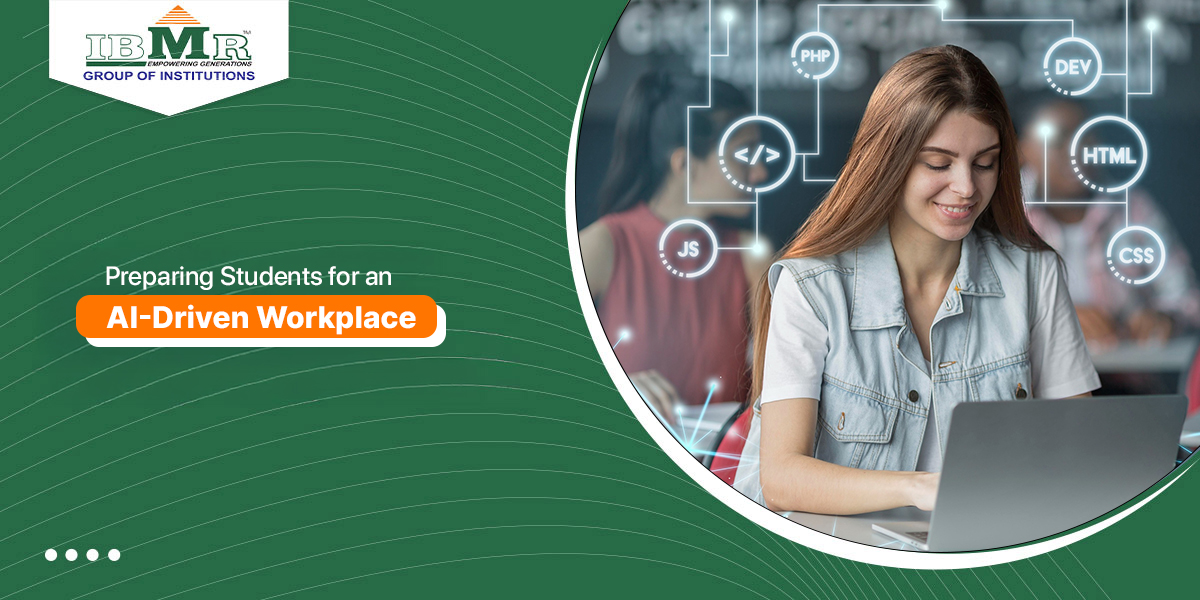
Artificial Intelligence is no longer a futuristic concept confined to technology laboratories or research discussions; it has rapidly become a defining force shaping industries, workplaces, and managerial decision-making worldwide. From recruitment analytics and financial forecasting to supply chain optimization and customer relationship management, AI-driven systems are transforming how organizations operate and compete. According to the World Economic Forum Future of Jobs Report 2025, nearly 39% of workers’ core skills are expected to change by 2030 due to technological disruption and evolving business models. Furthermore, McKinsey & Company estimates that generative AI could contribute between USD 2.6 trillion and USD 4.4 trillion annually to the global economy through productivity and innovation gains. These developments clearly indicate that AI is no longer functioning merely as a support tool; it is increasingly becoming a collaborative force influencing strategy, operations, and leadership itself. In such an environment, business schools are facing an important question: are they adequately preparing students for an AI-driven workplace that demands both technological competence and human adaptability?
While management institutions have made visible progress in introducing technology-oriented subjects into their curricula, a substantial gap continues to exist between classroom learning and industry expectations. Traditional management education in many institutions still emphasizes theoretical frameworks, static case studies, and examination-centric learning methods that may not fully align with the realities of AI-enabled workplaces. Employers today seek graduates who can interpret data, collaborate with intelligent systems, and adapt quickly to digital disruption. According to the World Economic Forum, skills gaps remain one of the biggest barriers to organizational transformation globally, with nearly 63% of employers identifying them as a major challenge. Another concern lies in the pace at which AI technologies evolve; academic curricula often undergo lengthy revision processes, whereas industry tools and business applications transform within months. Additionally, concerns regarding overdependence on AI tools, academic integrity, declining critical thinking, and inadequate faculty training are becoming increasingly relevant within higher education ecosystems. Consequently, the challenge is not merely technological unpreparedness, but the risk of producing graduates with fragmented digital exposure without holistic managerial competence.
At the same time, the evolving educational landscape presents encouraging signs of transformation. Forward-looking business schools are increasingly redesigning their pedagogical approaches by incorporating business simulations, analytics laboratories, interdisciplinary projects, experiential learning, and industry collaborations into management education. Institutions are gradually recognizing that AI literacy should not remain confined to technical disciplines alone; instead, it must become a core managerial competency across marketing, finance, operations, human resource management, and entrepreneurship. According to the Association to Advance Collegiate Schools of Business, accredited business schools worldwide are increasingly integrating AI, business analytics, and digital transformation modules into mainstream management programs. Simulation-based learning environments and AI-assisted research tools are also enabling students to experience real-world decision-making scenarios where human judgment and machine intelligence coexist. Simultaneously, institutions are placing greater emphasis on creativity, emotional intelligence, ethical reasoning, and adaptive leadership—qualities that remain uniquely human despite rapid technological advancement. This emerging approach suggests that future-ready business schools may not be those teaching students how to compete against AI, but rather how to collaborate with it responsibly and intelligently.
Ultimately, the question is no longer whether Artificial Intelligence will transform workplaces; that transformation is already underway. The more meaningful question is whether management education can evolve quickly enough to prepare students for this transition with relevance, adaptability, and ethical awareness. Business schools today stand at a critical intersection where they must balance technological advancement with humanistic learning, digital capability with critical thinking, and automation with empathy-driven leadership. Producing graduates who are merely proficient in AI tools may not be sufficient in the long run. Instead, institutions must aim to nurture reflective thinkers, strategic problem-solvers, and socially conscious leaders capable of understanding both the opportunities and limitations of intelligent technologies. As AI continues to reshape industries and redefine professional roles, management education itself may need to undergo one of its most significant transformations in decades. Perhaps the true measure of a future-ready business school will not be how much technology it adopts, but how effectively it prepares students to remain meaningfully human in an increasingly intelligent world.
Authored by: Ayush Singh Rathore
Assistant Professor, IBMR